
Samsung’s Revolutionary Integration: Bringing Google Photos to AI TVs for Immersive Memory Experiences
🌟✨ Imagine curling up on your couch with family, not just binge-watching the latest series, but reliving your most cherished moments—vacations, birthdays, and everyday joys—on a massive, crystal-clear screen. That’s the magic Samsung is promising with its latest announcement: integrating Google Photos directly into its AI TV lineup. This isn’t just a tech upgrade; it’s a heartfelt evolution in how we connect with our personal histories. Announced on December 29, 2025, this partnership between Samsung and Google aims to transform your living room into a dynamic photo gallery, debuting in 2026. As someone who’s always fascinated by how technology bridges the gap between digital memories and real-life emotions, this feels like a game-changer. Let’s dive deep into the full details, exploring what this means for users, the features involved, and why it’s set to redefine smart home entertainment. 🚀📸

Understanding Samsung’s AI TV Ecosystem: The Foundation of Innovation
To appreciate this integration, we first need to understand Samsung’s AI TV lineup. Samsung has been at the forefront of smart TV technology for years, with its Neo QLED and OLED models incorporating advanced AI capabilities. These TVs aren’t just displays; they’re intelligent hubs powered by the Tizen OS, which uses machine learning to optimize picture quality, sound, and even content recommendations. Features like AI Upscaling enhance older content to near-4K or 8K resolution, while Object Tracking Sound+ follows on-screen action for immersive audio.
The “AI” in Samsung AI TVs refers to the NQ8 AI Gen3 Processor, which handles everything from energy efficiency to personalized user experiences. This processor enables features like Vision AI Companion (VAC), a smart assistant that anticipates your needs—whether it’s adjusting ambient lighting or suggesting shows based on your viewing habits. Now, with Google Photos joining the mix, VAC will extend its reach into your personal photo library, making your TV a proactive memory curator. According to Samsung’s official statement, this integration will “bring to light the stories behind their photos—right from the comfort of their living room.” 😍🖼️
But what sets Samsung’s approach apart? Unlike traditional smart TVs that rely on basic app integrations, Samsung’s ecosystem emphasizes contextual awareness. For instance, Daily+ and Daily Board modes turn your idle TV into a digital dashboard, displaying weather, news, or now, photo highlights. This isn’t about slapping an app onto the interface; it’s about weaving photos into the fabric of daily life. With over 200 million Samsung TVs in homes worldwide, this move could popularize photo-sharing on big screens like never before.

Google Photos: The Powerhouse of Memory Management
Before we explore the integration, let’s recap what makes Google Photos a staple for over a billion users. Launched in 2015, Google Photos is a cloud-based service that offers unlimited storage for high-quality images (with options for original quality via Google One subscriptions). Its AI-driven features are legendary: automatic organization into albums, facial recognition for people-based searches, and even animations that bring still photos to life.
One standout is the “Memories” feature, which curates thematic collages or videos from your library, often with music and effects. It’s like having a personal storyteller sift through your photos. Google Photos also excels in searchability—type “beach sunset” or “family picnic,” and it pulls up relevant shots instantly, thanks to machine vision tech. Privacy is a big focus too, with end-to-end encryption for backups and controls over sharing.
Integrating this with TVs makes perfect sense in a post-pandemic world where families crave shared experiences. Shimrit Ben-Yair, Vice President of Google Photos and Google One, emphasized: “We’re excited to bring Google Photos to Samsung TVs—helping people enjoy their favorite photos on a larger screen and reconnect with their memories in new ways.” This partnership leverages Google’s AI expertise to elevate Samsung’s hardware, creating a synergy that’s more than the sum of its parts. 📱➡️📺

The Heart of the Matter: How the Integration Works
So, how will this actually function? Users will sign in with their Google Account on the Samsung TV, granting access to backed-up photos and videos. No need for casting from your phone—everything syncs seamlessly. The interface will integrate with Tizen OS, appearing as a native app or within the VAC ecosystem. Photos won’t just be dumped onto the screen; they’ll be curated intelligently.
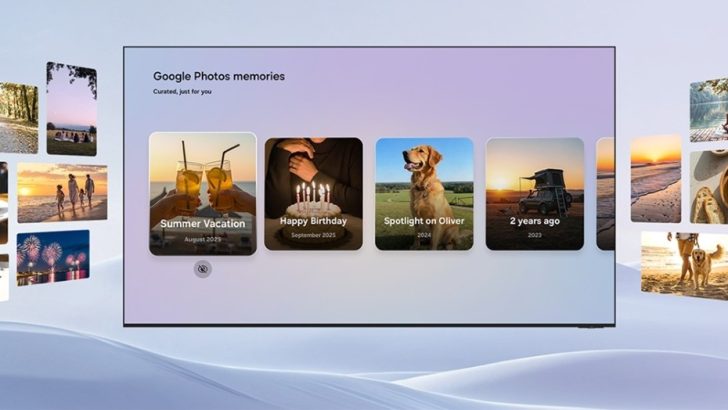
Key to this is the expansion of Google Photos’ features to the TV format. For example, curated memories will organize content by people, places, and moments, displaying them in a cinematic layout optimized for large screens. This means slideshows that feel like mini-movies, with transitions and zooms that highlight details you might miss on a phone. Integration with Daily+ ensures photos pop up contextually—perhaps a vacation album during downtime or family portraits on weekends.
Moreover, Samsung’s AI will enhance the experience. The TV’s processor could upscale low-res photos for stunning clarity, while voice commands via Bixby or Google Assistant let you navigate hands-free: “Show me photos from our Paris trip.” It’s effortless, turning passive viewing into interactive storytelling. As per reports, this setup is simple yet powerful, requiring only that Memories aren’t disabled in Google Photos settings. 🎥🌈
Spotlight on Features: Memories, Create with AI, and Personalized Results
Let’s break down the three pillar features Samsung highlighted.
First, Memories—launching exclusively on Samsung TVs in early 2026 (starting March) for six months. This brings curated stories to the big screen for the first time, focusing on meaningful moments like trips or family events. Imagine a montage of your child’s first steps playing automatically, complete with emotional depth. It’s not just photos; it’s narratives that evoke nostalgia.
Next, Create with AI, powered by Nano Banana (Google DeepMind’s image generation and editing model), arriving later in 2026. This lets users apply themed templates for fun transformations—turn a beach photo into a surreal artwork or remix styles like turning a portrait into a cartoon. There’s also “Photo to Video,” converting stills into short clips with animations. Select templates will be Samsung-exclusive, adding value. This feature democratizes creativity, making AI editing accessible without a computer.
Finally, Personalized Results, also in late 2026, offers slideshows based on topics. Search “hiking adventures,” and get a tailored show. It’s like having an AI curator personalize your viewing. These features integrate with VAC for proactive suggestions, ensuring memories surface naturally. As Kevin Lee noted, it’s about rediscovering stories behind photos. 🧠✨
:max_bytes(150000):strip_icc()/how-to-cast-google-photos-using-chromecast-03-a04e7fab10484a29a53515da3df00a47.jpg)
User Benefits: From Nostalgia to Family Bonding
The real win here is emotional. In an era of scattered digital lives, this integration centralizes memories on the home’s biggest screen, fostering togetherness. Families can relive vacations without huddling around phones, turning evenings into shared rituals. For seniors, it’s accessible—voice controls make navigation easy, combating isolation.
Practically, it eliminates casting hassles. No more interruptions from phone notifications; everything’s native. AI enhancements like upscaling ensure old photos look modern, while creative tools add fun—imagine kids remixing family pics into videos. Privacy remains robust: Google Photos’ controls apply, and Samsung’s Knox security protects data.
From a lifestyle perspective, this blurs lines between entertainment and personal content. Your TV becomes a memory hub, integrating with smart homes for ambient displays. As one article puts it, it’s “a cinematic gallery experience to the heart of the home.” It’s empowering, making technology serve emotions rather than just convenience. 👨👩👧👦❤️

Timeline and Availability: When Can You Get It?
Rollout starts with 2026 Samsung TV models in early 2026, with Memories leading the charge. Select existing TVs will get updates later via software, though details on compatible models are pending—likely 2024/2025 AI-enabled ones. Features vary by region and model, but Samsung promises broad access.
Create with AI and Personalized Results follow in the second half of 2026. This phased approach allows refinement based on feedback. For users, it means upgrading to a 2026 model for the full experience, but software updates keep older TVs relevant. Excitement builds toward CES 2026, where demos might showcase this. ⏰📅
Privacy and Security: Safeguarding Your Cherished Moments
With personal photos involved, privacy is paramount. Google Photos requires explicit consent for backups, and features like Memories can be toggled off. On Samsung’s side, Tizen OS uses Knox Vault for hardware-level security, encrypting data and preventing unauthorized access.
The integration doesn’t store photos on the TV; it streams from Google’s cloud, minimizing risks. Users control sharing, and AI processing happens on-device where possible for speed and privacy. Samsung and Google both comply with GDPR and CCPA, ensuring transparency. While no system is foolproof, this duo’s track record is strong—Google’s two-factor authentication adds layers. Rest assured, your memories stay yours. 🔒🛡️
The Broader Implications: Shaping the Future of Smart TVs
This move signals a shift toward personalized, AI-driven home entertainment. Competitors like LG (with webOS) or Sony (Android TV) might follow, integrating similar services. It could spur Google to expand Photos to other platforms, creating a unified ecosystem.
In the bigger picture, it’s part of the AI boom—Nano Banana exemplifies how generative AI enters consumer devices. Expect more: AI-generated wallpapers, voice-narrated albums, or AR overlays. For Samsung, it strengthens its AI leadership, potentially boosting sales. As tech evolves, TVs become emotional anchors, blending utility with sentiment. 🌐🔮
How It Stacks Up Against Competitors
Compared to Apple TV’s Photos app, Samsung’s version offers more AI flair with Nano Banana. Roku or Fire TV have basic photo viewers, but lack curation depth. LG’s ThinQ AI integrates galleries, but without Google’s vast library. Samsung’s exclusivity on Memories gives it an edge, though cross-platform compatibility might emerge. Overall, this positions Samsung as innovative, blending hardware with Google’s software might. ⚖️🏆
Conclusion: A New Era of Big-Screen Nostalgia
Samsung’s Google Photos integration for AI TVs is more than tech—it’s a bridge to our past, enhanced by AI’s future. From curated Memories to creative edits, it promises immersive, heartfelt experiences. Set for 2026, it’s worth watching. Whether upgrading or updating, this could make your TV the heart of home memories. Here’s to reliving favorites on the big screen! 🎉📺
(Word count: approximately 2050)