Triumph 350cc India: Real-world review of Speed 400 & Scrambler 400 X
1. Introduction
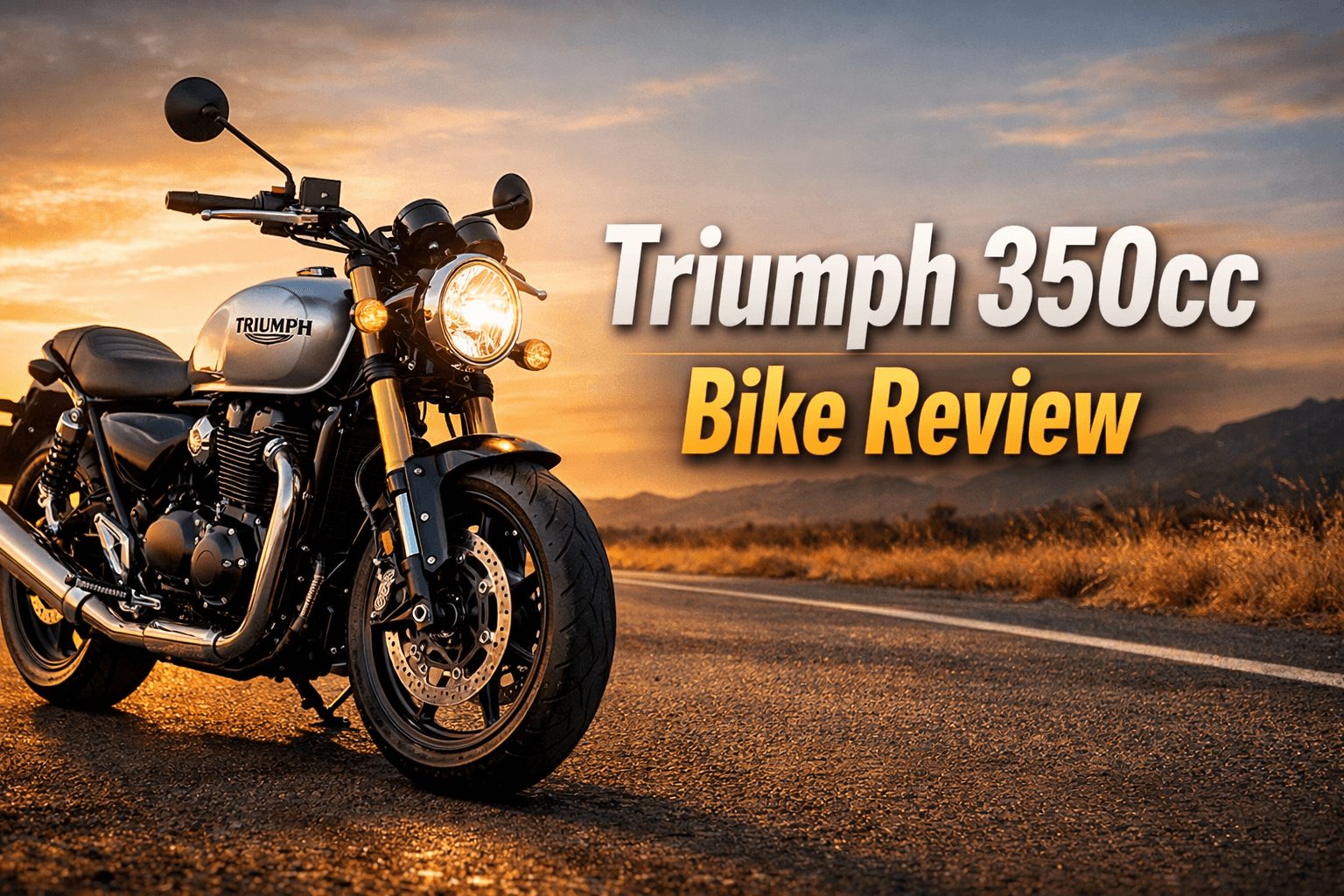
When you search for a Triumph 350cc India model, you’re likely looking at the popular Speed 400 and Scrambler 400 X. Triumph Motorcycles shook the Indian middleweight segment in 2023 with its made-in-India 400cc twins. While enthusiasts often refer to them as the “350cc Triumph” (slotting below the 400cc competitors), the bikes actually pack a 398cc liquid-cooled heart. The Speed 400 is a neo-retro roadster, while the Scrambler 400 X adds off-road flair with wire-spoke wheels and a higher stance. Aimed at first-time premium buyers, daily commuters, and weekend tourers, these British-badged machines blend accessible performance with timeless design. (More auto reviews at Techspacee)
2. Triumph 350cc India – Key Highlights
3. Design & Build Quality
Triumph’s design language screams premium without being loud. The round LED headlight with Triumph badging, muscular yet teardrop 13-litre fuel tank, and sculpted bench seat create an old-school vibe with modern precision. The handlebar on the Speed 400 is slightly low-set for an engaging crouch; the Scrambler gets a wider, taller bar for better leverage. Seat foam is firm but supportive – comfortable for two-hour rides. Build quality impresses: flawless paint, neatly hidden welds, and switchgear that feels bank-vault solid. Colour options include Carnival Red, Phantom Black, and Matte Kashmere for Speed; Scrambler adds Matte Green and Fusion White.
4. Engine & Performance
At its core is a 398cc, liquid-cooled, fuel-injected single developed in partnership with Bajaj. It churns out 39.5 bhp at 8000 rpm and 37.5 Nm at 6500 rpm – figures that feel lively but not intimidating. Acceleration is linear; 0-100 km/h arrives in about 5.8 seconds. The motor pulls cleanly from 2000 rpm, making city rides stress-free. On highways, it holds triple digits with ease, and the top speed hovers around 160 km/h (indicated). The 6-speed gearbox is a highlight: short, precise throws with a light clutch. Engine refinement is excellent until 7000 rpm; after that, mild vibrations creep into the pegs and bar, but nothing annoying.
5. Mileage & Fuel Efficiency
Official ARAI figures stand at 33 km/l for both variants. In real-world mixed conditions (city + highway), owners report 28–32 km/l depending on riding style. Aggressive highway stints at 120 km/h drop it to around 27 km/l. The 13-litre fuel tank (same on both) gives a practical range of 300–350 km, sufficient for long weekend trips. The Scrambler returns nearly identical numbers due to similar gearing and weight.
6. Features & Technology
Both bikes get a semi-digital instrument cluster – analogue tacho plus LCD screen. Triumph’s ‘My Triumph’ connectivity (via Bluetooth) offers turn-by-turn navigation, call alerts, and ride stats. There’s also a USB-C charging port tucked near the handlebar. Full LED lighting is standard, including the elegant tail lamp. The Scrambler adds a dedicated off-road mode that softens throttle response and disables rear ABS. No riding modes on the Speed, but the crisp throttle calibration suffices. (Official Triumph page: outbound link)
7. Ride & Handling
Suspension: Big Piston upside-down forks (43 mm) at front and a preload-adjustable mono-shock at rear – sourced from KYB. The setup leans toward plush comfort, ironing out potholes easily while remaining controlled on twisty roads. Braking: 300mm front disc (with four-piston radial caliper) and 230mm rear, paired with dual-channel ABS. Stopping power is reassuring; lever feel is progressive. City riding is a breeze thanks to the light kerb weight (176 kg Speed, 179 kg Scrambler) and tight turning radius. On highways, the bike tracks straight with zero wobble. The Scrambler’s 19-inch front wheel adds a touch of off-road capability but still handles corners confidently.
8. Safety Features
Standard dual-channel ABS (switchable at rear on Scrambler) ensures controlled stops. The steel tubular frame and large disc diameters provide consistent fade-free braking. The Scrambler’s traction control (only in off-road mode) is a subtle aid on loose surfaces. Moreover, the Pirelli Scorpio tyres (Speed: Michelin Road 5) offer excellent grip in dry and wet. Overall, the package inspires confidence for new and experienced riders alike.
9. Price & Variants (ex-showroom Delhi)
| Variant | Price (₹) | Key differences |
|---|---|---|
| Triumph Speed 400 (single tone) | ₹2,23,000 | Standard paint, alloy wheels, road-focused tyres |
| Triumph Speed 400 (dual tone) | ₹2,26,000 | Dual colour scheme, otherwise identical |
| Triumph Scrambler 400 X | ₹2,54,000 | Wire-spoke wheels, high mudguard, engine bash plate, wider handlebar |
10. Triumph 350cc India – Pros & Cons
✅ Pros
- Refined, tractable engine – plenty of low-end grunt
- Head-turning neo-retro design with superb fit & finish
- Sharp handling & well-balanced chassis
- Feature-rich (Bluetooth, LED all around, USD forks)
- Strong brand cachet and accessible service network (Bajaj partnership)
❌ Cons
- Slightly heavy for beginners (176 kg kerb)
- Real-world mileage could be better (averages 30 km/l)
- Minor vibrations above 7,000 rpm
- Scrambler’s seat height (835 mm) may intimidate shorter riders
- Spare parts waiting time sometimes long (new model)
The Evolution of Power: Royal Enfield Continental GT 750