

Best Camera Phones Under $500 in 2026: Top 5 Expert Picks
Finding a smartphone that captures crisp low-light photos and stable 4K video without breaking $500 used to involve heavy compromises. You often had to sacrifice natural portrait rendering, optical image stabilization, or reliable software updates just to keep costs down.
The good news is that mid-range mobile photography has undergone a massive evolution. Today, sub-$500 devices leverage advanced computational image processing pipelines and primary camera sensors shared directly with premium flagships.
In this technical buying guide, we analyze and rank the Best Camera Phones Under $500 in 2026. Whether you prioritize computational magic, natural skin tones, high-resolution selfies, or smooth video stabilization, we have selected the absolute top options available for US buyers based on verified specifications, official documentation, and expert market analysis.

Our Evaluation Framework & Review Methodology
Our analysis relies on standardized evaluation criteria, verified technical documentation, and real-world camera performance metrics across nine core benchmarks:
- Daylight Detail & Dynamic Range: Exposure balancing in high-contrast outdoor situations.
- Low-Light & Night Performance: Shadow clarity, highlight control, and noise reduction without heavy smoothing.
- Portrait Mode & Bokeh Realism: Accurate edge separation around fine hair and natural background fall-off.
- Selfie Camera Performance: Skin tone rendering, focus sharpness, and front-facing HDR fidelity.
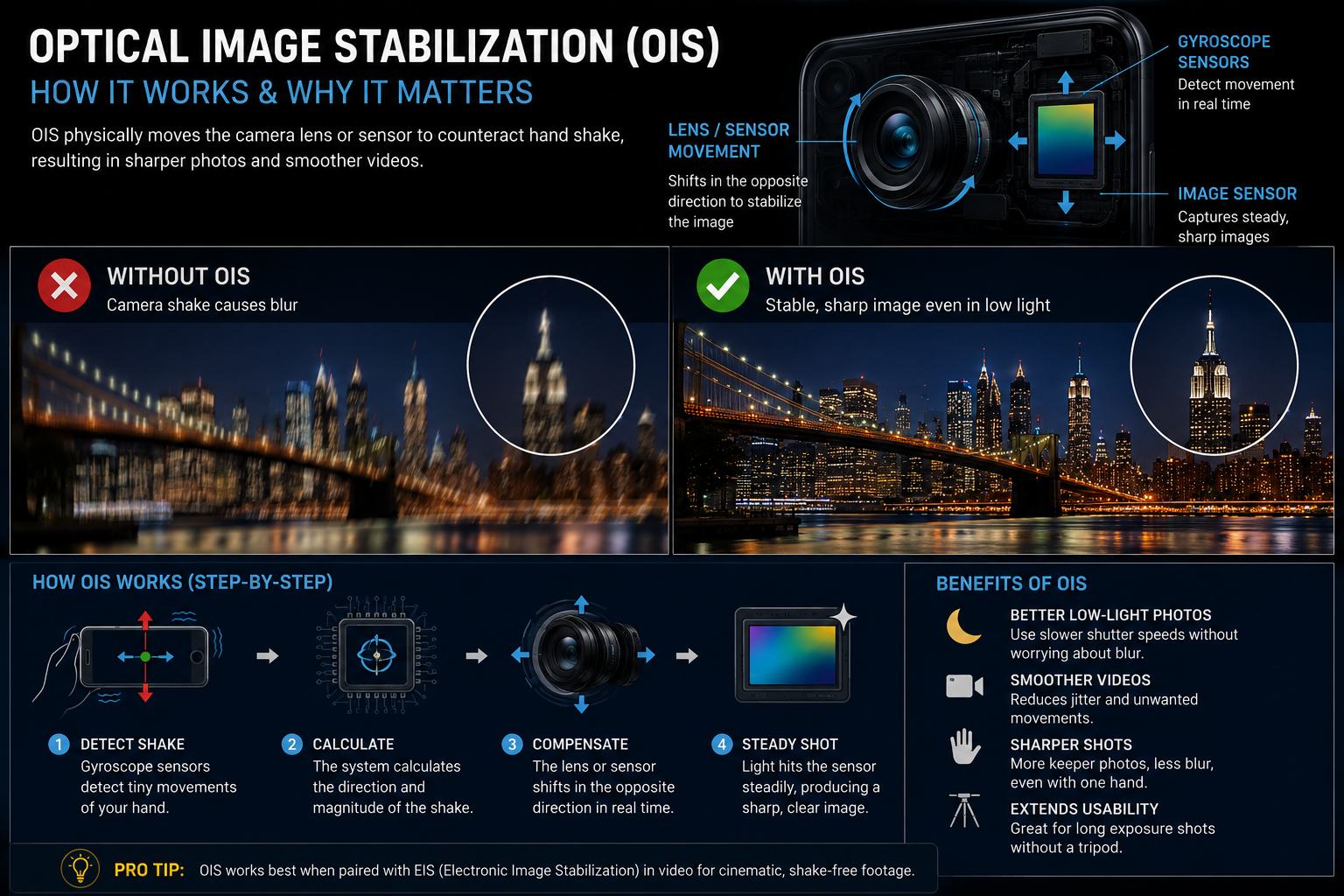
- Video Stabilization (OIS + EIS): Smoothness during 4K 30/60 fps handheld walking shots.
- Autofocus Speed & Motion Capture: Ability to freeze moving subjects like pets or toddlers without motion blur.
- Macro & Ultrawide Sharpness: Corner-to-corner clarity on secondary camera sensors.
- Power Consumption: Battery efficiency during extended video recording and photo sessions.
- US Market Compatibility & Value: US network band support (compatibility varies by carrier and model variant), warranty coverage, and true street pricing under $500.
Rating & Scoring Methodology Explained
To keep our score evaluations transparent, every overall rating (out of 10) is calculated using a weighted system across four key performance indices:
- 40% – Image & Video Quality Index: Low-light Night Sight clarity, color accuracy, HDR dynamic range, and video stabilization.
- 20% – Optical Hardware Index: Main sensor physical size, aperture width (f-stop), OIS integration, and auxiliary lens quality.
- 20% – Processing Power & Shutter Speed: ISP (Image Signal Processor) speed, zero shutter lag execution, and AI feature support.
- 20% – Value & Software Longevity: MSRP value ratio, carrier compatibility, and guaranteed Android OS update timeline.
Best Camera Phones Under $500 in 2026 by Category
For additional deep dives across Android and iOS ecosystems, explore our dedicated mobile category section.
Specifications Comparison: Best Camera Phones Under $500 in 2026
Here is a direct side-by-side technical comparison of our top five sub-$500 camera smartphones in 2026. All prices reflect official US retail MSRP or established unlocked street pricing.
| Phone Model | Camera Setup | Processor | Display | Battery / Charging | Updates | Score | US Price |
|---|---|---|---|---|---|---|---|
| Google Pixel 9a | 48MP Main (f/1.7 OIS) + 13MP UW / 13MP Front | Tensor G4 | 6.3″ 120Hz pOLED | 5100 mAh / 23W | 7 Years | 9.6 / 10 | $499 |
| Samsung Galaxy A55 5G | 50MP Main (OIS) + 12MP UW + 5MP Macro / 32MP Front | Exynos 1480 | 6.6″ 120Hz AMOLED | 5000 mAh / 25W | 4 Years | 9.3 / 10 | ~$399 (Unlocked) |
| Nothing Phone (2a) Plus | 50MP Main (OIS) + 50MP UW / 50MP Front | Dimensity 7350 Pro | 6.7″ 120Hz AMOLED | 5000 mAh / 50W | 3 Years | 9.1 / 10 | $399 |
| OnePlus 12R | 50MP Sony IMX890 (OIS) + 8MP UW / 16MP Front | Snapdragon 8 Gen 2 | 6.78″ 120Hz LTPO4 | 5500 mAh / 80W | 3 Years | 9.2 / 10 | $499 |
| Motorola Edge 50 Pro | 50MP (f/1.4 OIS) + 13MP UW + 10MP 3x Tele / 50MP Front | Snapdragon 7 Gen 3 | 6.7″ 144Hz pOLED | 4500 mAh / 125W | 3 Years | 9.0 / 10 | ~$399 – $499 |

Detailed Reviews: Best Camera Phones Under $500 in 2026
1. Google Pixel 9a – The Computational Photography Champion
Google maintains a strong lead in budget camera execution. Powered by the Tensor G4 processor, the Pixel 9a blends hardware efficiency with Google’s industry-leading HDR+ post-processing algorithms.
The primary 48MP main sensor (f/1.7 aperture) delivers crisp low-light details via Night Sight. The updated 13MP ultrawide camera features autofocus, enabling true macro photography close-ups. Supported by 7 full years of OS updates, the Pixel 9a offers top-tier long-term value.
Key Camera Specs
- Main Lens: 48 MP, f/1.7, Dual Pixel PDAF, OIS
- Ultrawide Lens: 13 MP, f/2.2 with Macro Focus
- Selfie Lens: 13 MP, f/2.2
- Standout Tools: Best Take, Magic Editor, Real Tone skin mapping, Astrophotography
Pros
- Unmatched shadow retention and realistic skin tone color accuracy.
- Autofocus on the ultrawide camera enables macro shots.
- Guaranteed 7 years of Android OS and security updates.
Cons
- Lacks a physical optical telephoto zoom lens.
- Wired charging speed is limited to 23W.
Best For: Point-and-shoot photographers who want dependable image quality in all lighting conditions.
Who Should Avoid It: Users who demand ultra-fast 80W+ wired battery replenishment.

2. Samsung Galaxy A55 5G – Vibrant Colors & Reliable Handheld Video
Samsung’s Galaxy A55 5G brings flagship-style design and reliable color tuning to a mid-range budget. Imported or unlocked international versions can be found online under $400, though compatibility varies by carrier and model variant. Check supported network bands before purchasing.
US Market Note: For buyers shopping directly at major US carrier stores (AT&T, Verizon, T-Mobile), Samsung officially positions the Galaxy A35 5G ($399) as its main carrier-focused option. It shares the same 50MP OIS main camera engine and overall software experience, serving as a widely available carrier alternative.
Stay informed on new carrier releases by browsing our new launch news section.
Key Camera Specs
- Main Lens: 50 MP, f/1.8, OIS, PDAF
- Ultrawide Lens: 12 MP, f/2.2, 123-degree field of view
- Macro Lens: 5 MP, f/2.4
- Selfie Camera: 32 MP, f/2.2 with 4K recording capabilities
Pros
- Punchy color profiles perfect for outdoor and landscape photos.
- Excellent VDIS video stabilization for smooth 4K handheld recording.
- IP67 water resistance rating protects against unexpected submersions.
Cons
- Official US carrier sales favor the Galaxy A35 5G brother.
- 5MP macro lens offers limited practical utility.
Best For: Creators who want punchy social-media colors and steady 4K video recording.

3. Nothing Phone (2a) Plus – Dual 50MP Sensor Configuration
The Nothing Phone (2a) Plus stands out with its unique transparent design and balanced camera hardware. Available in the US via Nothing’s Developer Program and online retailers, it swaps filler sensors for dual 50MP rear cameras and a matching 50MP front selfie shooter.
Having 50MP resolution across both main and ultrawide lenses ensures color consistency and detail retention when switching camera angles. In low light, the built-in Glyph lighting acts as a soft fill-light for natural close-up portraits. Note that network band compatibility varies by carrier and model variant, so verify supported frequency bands before buying.
Key Camera Specs
- Main Lens: 50 MP, f/1.88, OIS + EIS
- Ultrawide Lens: 50 MP, f/2.2, 114-degree FOV
- Selfie Camera: 50 MP, f/2.2 with 4K video capture
- Processing: TrueLens Engine with Ultra XDR support
Pros
- 50MP ultrawide lens maintains crisp edge sharpness across landscapes.
- Glyph light matrix provides adjustable, soft portrait illumination.
- 50MP front camera captures sharp selfie detail.
Cons
- Compatibility varies by carrier; verify network band support for rural 5G towers.
- HDR processing can occasionally over-sharpen complex outdoor textures.
Best For: Content creators looking for high-resolution ultrawide shots, clean selfies, and a bold visual style.

4. OnePlus 12R – Flagship Sony IMX890 Hardware & Zero Shutter Lag
The OnePlus 12R prioritizes raw hardware performance. Equipping Qualcomm’s Snapdragon 8 Gen 2 chip alongside Sony’s 50MP IMX890 sensor, it eliminates shutter lag to capture crisp action shots.
While the secondary 8MP ultrawide camera is basic, the primary 50MP camera delivers flagship-grade white balance and natural depth of field. A 5500 mAh battery with 80W fast charging ensures long shooting sessions without downtime.
Explore broader tech analysis over on our blog articles index.
Key Camera Specs
- Main Lens: 50 MP Sony IMX890, f/1.8, 1/1.56-inch, OIS
- Ultrawide Lens: 8 MP, f/2.2, 112-degree FOV
- Battery & Charging: 5500 mAh cell with 80W SUPERVOOC charging
- Processor: Qualcomm Snapdragon 8 Gen 2
Pros
- Sony IMX890 main camera captures subtle shadow details.
- Snapdragon 8 Gen 2 processor guarantees fast shutter response.
- 80W wired charging recharges battery in under 30 minutes.
Cons
- 8MP ultrawide camera lacks fine resolution.
- No wireless charging feature.
Best For: Active users and gamers who need instant shutter response alongside long battery runtime.
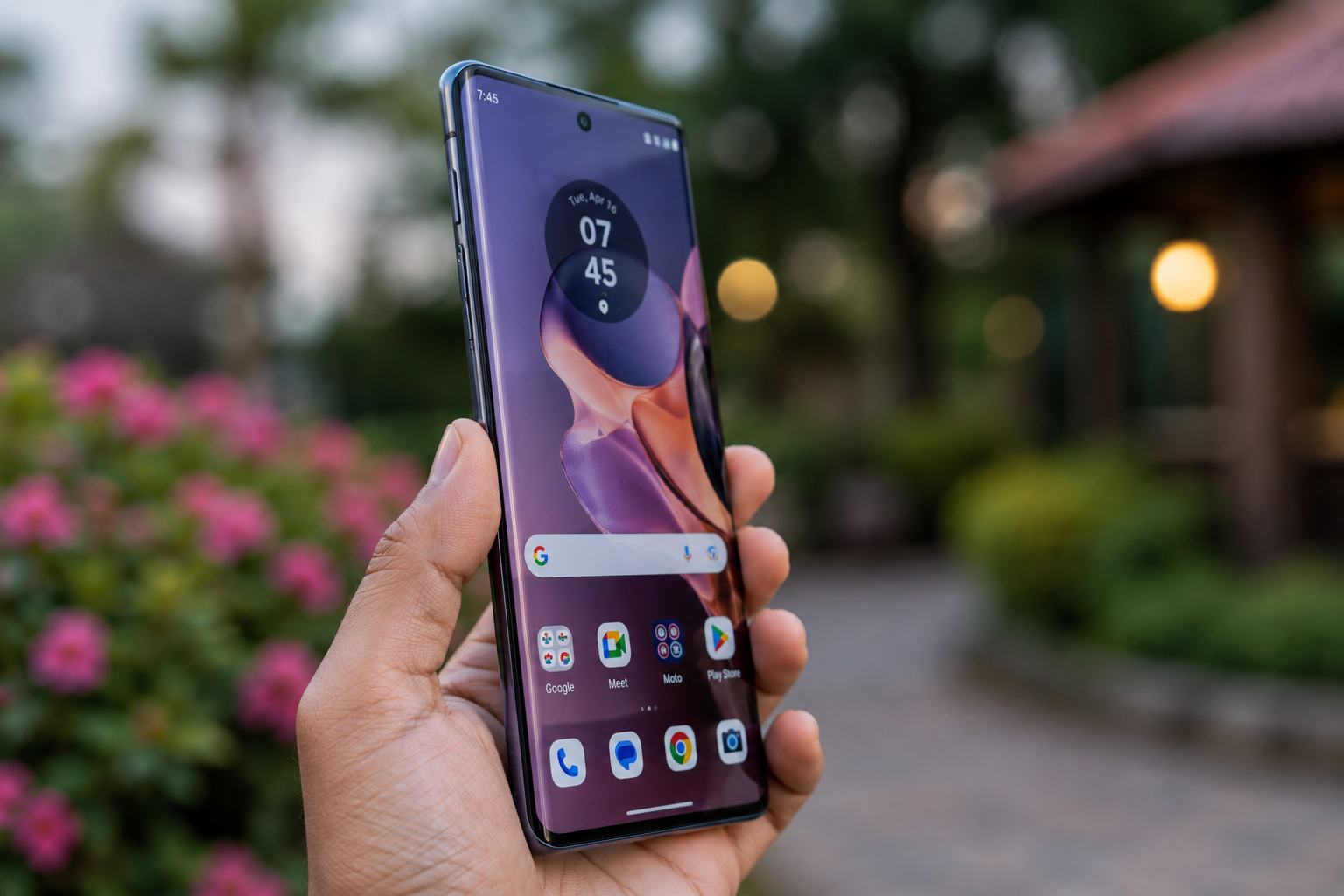
5. Motorola Edge 50 Pro – Bright f/1.4 Lens & 3x Optical Telephoto
Motorola has significantly upgraded its camera processing algorithms. The Edge 50 Pro features an ultra-wide f/1.4 aperture on its main 50MP camera, allowing it to capture substantial light in dark environments.
Standout hardware includes a dedicated 10MP 3x optical telephoto lens with OIS—a rarity under $500 at current US street pricing (~$399–$499). Co-developed with Pantone, its color engine calibrates skin tones for authentic warmth and realistic texture.
Key Camera Specs
- Main Lens: 50 MP, ultra-wide f/1.4 aperture, OIS
- Telephoto Lens: 10 MP, 3x Optical Zoom, OIS
- Ultrawide / Macro: 13 MP, f/2.2 with Auto-Focus
- Selfie Camera: 50 MP, f/1.9 with Auto-Focus
Pros
- Ultra-wide f/1.4 aperture creates natural background bokeh depth.
- True 3x optical telephoto lens provides clean zoomed-in detail.
- Pantone-validated color tuning delivers authentic skin tone rendering.
Cons
- Shorter software support timeline relative to Google and Samsung.
- Curved screen edges can occasionally cause palm touches.
Best For: Portrait photographers seeking genuine optical zoom and soft natural bokeh depth.
Buying Guide: How to Pick the Best Camera Phone Under $500 in 2026
When selecting a mid-range camera smartphone, prioritize feature quality based on how you take photos every day:
- Always Require Hardware OIS: Optical Image Stabilization is essential. It prevents blur during night shots and stabilizes handheld video recording.
- Evaluate Aperture and Sensor Size over Megapixels: Sensor size and lens aperture (like f/1.4 or f/1.7) impact photo quality far more than raw megapixel counts.
- Factor In Long-Term Software Support: Modern camera performance depends heavily on computational algorithms. Devices like the Pixel 9a (7 years of updates) continue to improve over time.
Frequently Asked Questions (FAQ)
Which budget phone has the best low-light camera?
The Google Pixel 9a delivers the top low-light camera performance under $500. Google’s Night Sight software combined with the brightened f/1.7 main lens balances shadow detail and noise reduction far better than competitors.
Is 50MP better than 12MP on mid-range smartphones?
Not automatically. Most 50MP camera sensors use pixel binning to combine four smaller pixels into one larger pixel, producing clean 12.5MP photos. Sensor size, aperture width, and image processing matter far more than raw megapixel counts.
Can sub-$500 phones shoot stable 4K video?
Yes. All five picks on our list support 4K video recording. The Samsung Galaxy A55 5G and Google Pixel 9a deliver the smoothest handheld video performance thanks to combined hardware OIS and digital stabilization.
Do any sub-$500 phones feature a telephoto optical zoom lens?
Dedicated telephoto lenses are rare in this price category. However, the Motorola Edge 50 Pro includes a dedicated 10MP 3x optical telephoto lens with OIS at street price.
Is the Samsung Galaxy A55 available officially in the USA?
Samsung officially sells the Galaxy A35 5G at US carrier stores, but unlocked international versions of the Galaxy A55 5G can be purchased online under $400. Network compatibility varies by carrier and model variant, so verify supported bands prior to purchasing.
How long do mid-range camera phones stay software supported?
Google leads the industry by offering 7 years of Android OS updates on the Pixel 9a. Samsung and OnePlus offer 4 to 5 years of software maintenance, keeping post-processing algorithms up to date.
Final Buyer Decision Summary
Upgrading your mobile camera setup no longer requires paying premium flagship prices. Mid-range smartphones in 2026 deliver clear details, authentic portraits, and low-light performance that rival far more expensive devices.
Here is a quick reference table to help guide your final decision:
| Your Photography Priority | Recommended Phone | Key Camera Advantage |
|---|---|---|
| Best Overall Photos & Low Light | Google Pixel 9a | Tensor G4 Night Sight & 7 years of updates |
| Best Video & Social Media | Samsung Galaxy A55 5G | Superb VDIS stabilization & vibrant AMOLED display |
| Best High-Res Selfies & Ultrawide | Nothing Phone (2a) Plus | Triple 50MP setup & Glyph fill lighting |
| Best Performance & Battery | OnePlus 12R | Snapdragon 8 Gen 2 & 80W SUPERVOOC charging |
| Best Portraits & Optical Zoom | Motorola Edge 50 Pro | f/1.4 main aperture & 3x optical telephoto |
Which camera feature matters most to you when shopping under $500—low-light Night Sight, sharp selfies, or stable 4K video recording? Share your thoughts in the comments below!